Grief dismantles the forms we inherited; becoming is the moment we pattern ourselves into shapes that can finally breathe.
My work operates in the field between structure and emergence. I no longer use forms to contain identity; I use pattern, counterpoint, and residue to reveal how identity incarnates itself. The field is where ideals dissolve and the self begins—not as a vessel, but as presence.
This diptych presents grief as an architectural evolution. In Room of Broken Dreams, a functional vessel collapses under the weight of inherited expectation—beauty intact, identity unsustainable. In Room of Incarnation, form loosens into counterpoint: patterns that once camouflaged the self now accompany it. Rather than depict grief as sorrow, these works reveal grief as the pivotal moment when structure fails and the self learns to build again. The pairing moves from idealized geometry to lived patterning, from containment to emergence, offering a deeply contemporary interpretation of transformation through loss.
My work approaches grief as a structural transition rather than an emotional endpoint. In this transition, I explore the shift from inherited form to chosen pattern—what happens when the architecture that once defined identity can no longer contain it.
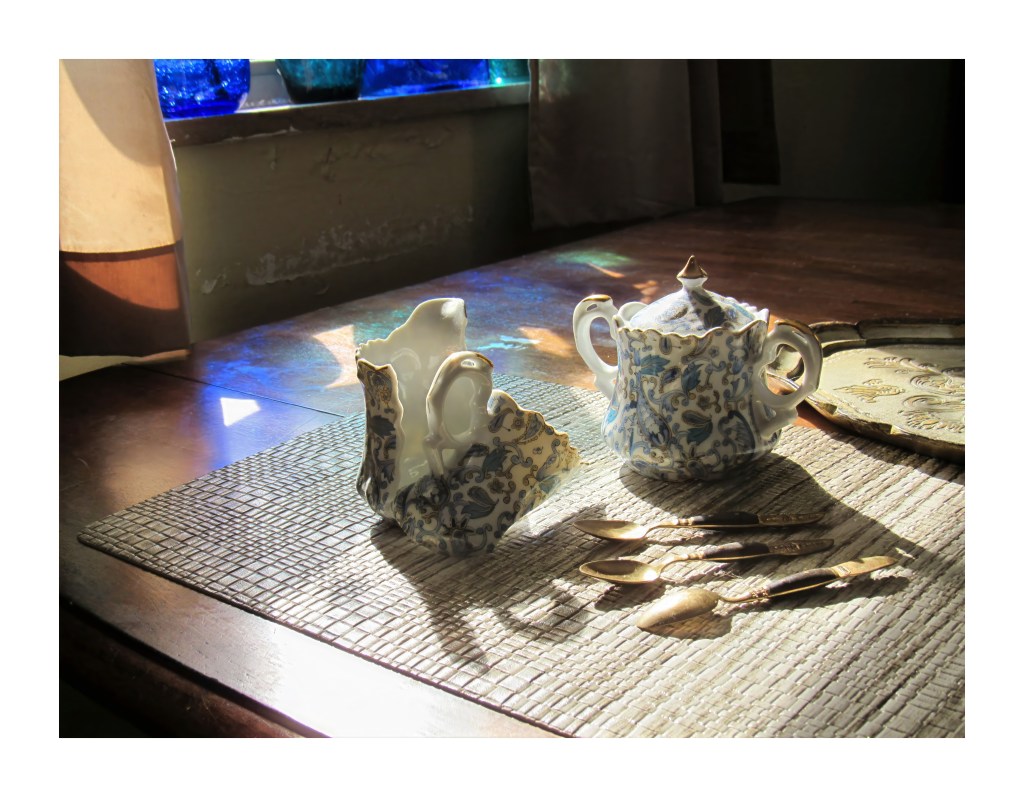
In Room of Broken Dreams, a once-functional vessel lies fractured, its beauty intact but its purpose gone.
This marks the moment grief begins: not when something disappears, but when we recognize it can no longer hold us. I learned to become what the room wanted so it wouldn’t destroy me; now I walk away from rooms that cannot see me unless I disappear.
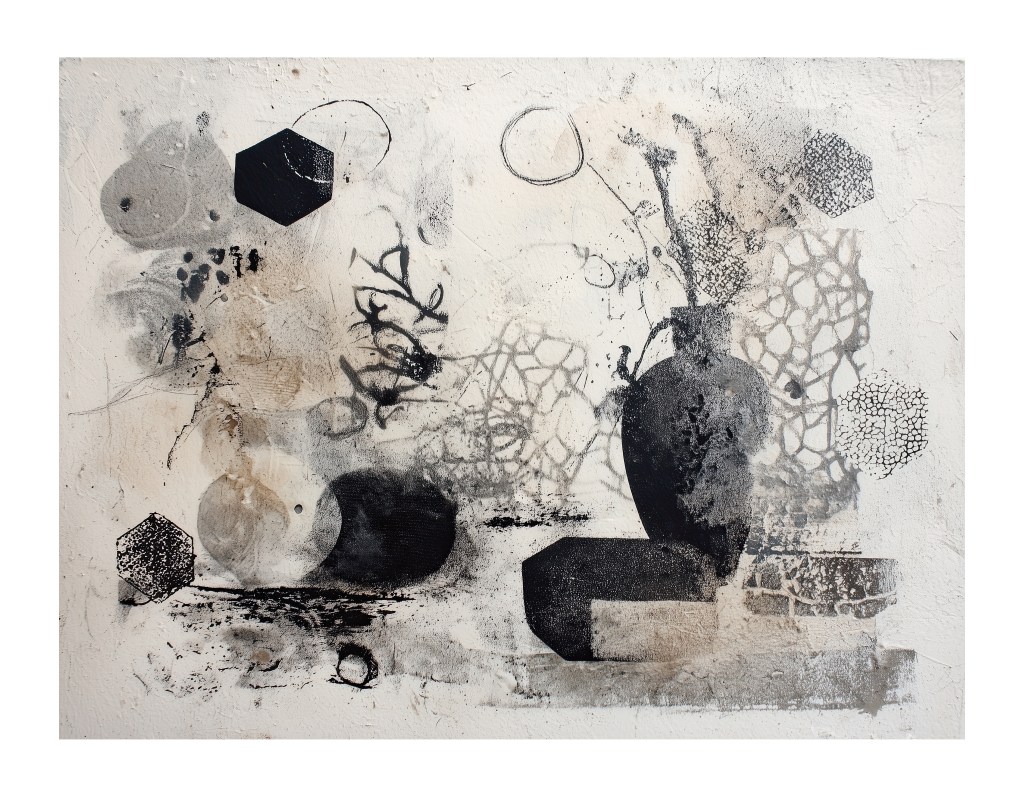
This room marks the moment identity recognizes the cost of its own camouflage.
Here, the forms that once held me no longer fit, yet their fragments remain. Incarnation does not replace what was broken; it begins inside the break. Grief persists—not as sorrow, but as material—fueling the shift from inherited architecture to pattern that can finally be lived. This is not escape. It is entry.
Room of Incarnation moves beyond ideal forms and inherited expectations—into a new patterning that leverages realism with a touch of grace. Here, marks operate in counterpoint; patterns that once camouflaged identity now stand beside it. Becoming is neither repair nor replacement, but an emergence: a self no longer held in shape, but shaping its own.
Grief, in this work, is not collapse—it dismantles the forms we inherited; becoming is the moment we pattern ourselves into shapes that can finally breathe.
My becoming does not erase the grief of what came before; it metabolizes it. The wound is not the opposite of incarnation—it is the material from which incarnation shapes itself.
 Parker&Creative